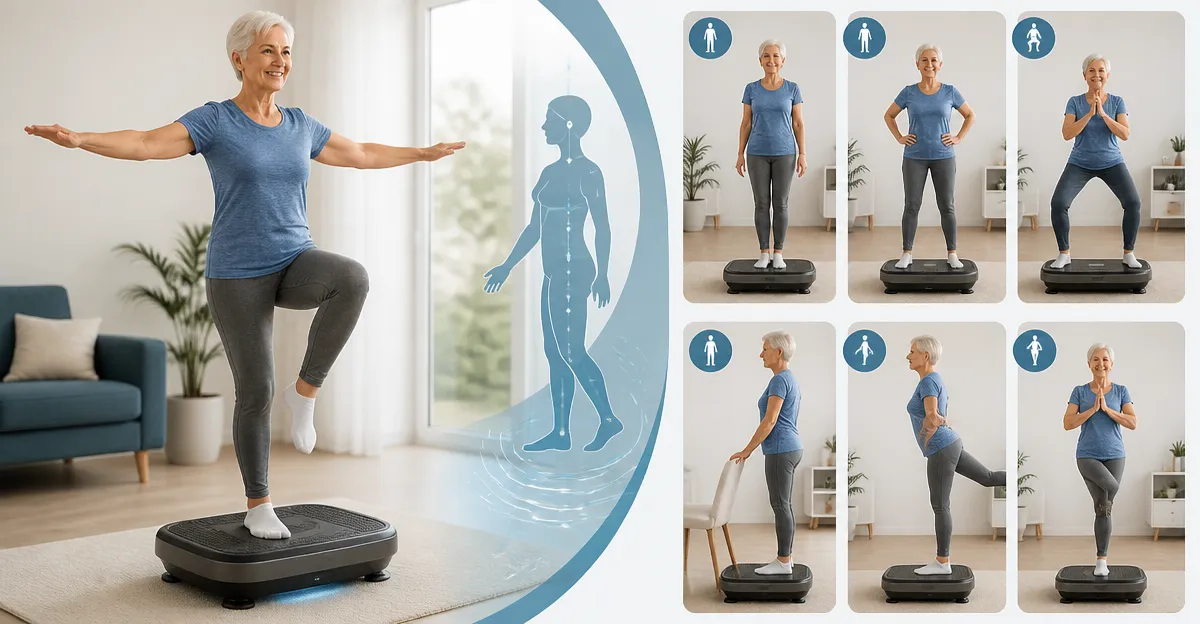
How to Improve Balance and Proprioception: Vibration Plate Exercises for Seniors — A Safe Step-by-Step Fall‑Prevention Guide
Introduction
This guide explains how older adults can use vibration plate technology to enhance balance, proprioception, and overall stability. It describes the physiological reasons why whole‑body vibration stimulates muscle spindles and improves neural feedback. Readers will learn a progressive routine that can be performed safely at home, even without prior fitness experience. By following the step‑by‑step plan, seniors can reduce the risk of falls and maintain independence.
What You’ll Need
- One vibration plate that suits the available space and budget. Recommended options are listed in the AXV Vibration Plate, Lifepro Waver, SoftGym Vibration Plate, Merach CV30, or HVX Vibration Plate.
- Non‑slip yoga mat (optional for extra stability).
- Light resistance bands for added challenge.
- Comfortable clothing that allows free movement.
Step‑by‑Step Instructions
Step 1: Prepare a Safe Exercise Area
Choose a flat surface that can support the weight of the plate and the user. Place the plate on a non‑slippery mat if the floor is polished. Ensure there is at least one arm’s length of clear space on each side to allow for balance adjustments. Keep a sturdy chair or countertop nearby for support during the first minutes.
The AXV Vibration Plate is compact enough to fit on a small rug, and its anti‑slip surface reduces the need for an additional mat. It costs $69.99 and holds a rating of 4.5 stars from more than fifteen thousand reviews, indicating reliable stability for beginners.
Step 2: Warm‑up the Muscles
Begin with five minutes of gentle marching in place, followed by shoulder rolls and ankle circles. The purpose of this warm‑up is to increase blood flow and prepare the proprioceptive receptors for vibration. Perform each movement slowly, focusing on full range of motion.
During the warm‑up, the Lifepro Waver can be set to its lowest speed (1 % vibration) to provide a subtle stimulus while the user walks around the plate. This model offers 99 speed settings, a maximum load of 330 lb, and a rating of 4.6 stars from thirty thousand reviews, making it a versatile warm‑up tool.
Step 3: Basic Standing Balance on the Plate
Step onto the plate with feet shoulder‑width apart. Keep the knees slightly bent, the spine neutral, and the gaze forward. Activate the plate at a low intensity (level 1‑3) for ten seconds, then rest for ten seconds. Repeat this cycle five times.
This exercise trains the muscle spindles in the calves and thighs, which are essential for detecting changes in body position. The SoftGym Vibration Plate provides 120 speed options and includes magnetic massage stones that enhance circulation during the pause periods. Priced at $59.99 with a 4.5‑star rating, it offers an economical entry point for seniors.
Step 4: Dynamic Weight Shifts
From the basic stance, shift weight slowly from the right foot to the left foot, then back again. Perform three repetitions on each side while the plate vibrates at a moderate level (4‑6). Keep the core engaged to avoid excessive sway.
The curved design of the Merach CV30 follows the natural arch of the foot, providing additional comfort during lateral shifts. It offers ten intensity levels, a compact footprint (20.3" × 11.3" × 4.7"), and a rating of 4.4 stars from two thousand reviews. Its price of $79.98 reflects the premium ergonomic design.
Step 5: Proprioceptive Circuit with Resistance Bands
Attach the included resistance bands to the plate’s side handles (if present) or to a stable anchor. Perform the following sequence without stopping: (a) squat to 30 % of maximum depth, (b) step‑out lunge to the right, (c) step‑out lunge to the left, (d) calf raise, (e) seated hip abduction while seated on a sturdy chair. Complete one circuit at a vibration level of 7‑9, then rest for thirty seconds. Repeat three circuits.
The HVX Vibration Plate includes dual resistance bands and a Bluetooth‑enabled remote, allowing the user to adjust speed without leaving the plate. Its capacity of 450 lb and 4.4‑star rating from one thousand eight hundred reviews make it suitable for a wide range of body types. The price of $49.99 is the most budget‑friendly option in this guide.
Step 6: Cool‑down and Stretch
After the circuit, lower the vibration to the lowest setting and stand quietly for one minute to allow the nervous system to reset. Follow with gentle stretches for the calves, hamstrings, and lower back. Hold each stretch for 20‑30 seconds while breathing deeply.
All of the plates mentioned have an LED display that shows time and speed, enabling the user to monitor the cool‑down period accurately. Selecting a plate with a clear display, such as the Lifepro Waver, simplifies this final stage.
Tips & Pro Tips
- Start with the lowest intensity and increase only when balance feels secure.
- Maintain a slight bend in the knees at all times to reduce joint stress.
- Use a handheld mirror to check posture during exercises.
- Hydrate before and after the session to support muscle function.
- Schedule the routine three times per week for optimal neuromuscular adaptation.
Troubleshooting
- Plate feels unstable: Verify that the anti‑slip surface is clean and that the floor is level. Adding a yoga mat underneath can improve friction.
- Excessive vibration discomfort: Reduce the speed setting by two levels and ensure the knees remain flexed.
- Remote control does not respond: Check the battery and confirm that you are pointing the remote within the indicated five‑foot range.
Conclusion
This guide has demonstrated how seniors can employ vibration plate exercises to improve balance, proprioception, and fall resistance. By preparing a safe environment, following the progressive steps, and selecting a plate that matches personal needs, users can experience measurable gains in stability. Consistent practice will translate into greater confidence during daily activities and a reduced likelihood of injury.
Products Mentioned in This Guide
Frequently Asked Questions
What is whole‑body vibration and how does it improve balance for seniors?
Whole‑body vibration sends rapid pulses to muscles, activating muscle spindles and enhancing neural feedback, which sharpens proprioception and steadiness.
How often should seniors perform vibration plate exercises?
Start with 2‑3 sessions per week, 5‑10 minutes each, and gradually increase to 4‑5 times weekly as tolerance improves.
Are there safety precautions seniors should follow when using a vibration plate?
Begin on a low‑intensity setting, keep a sturdy support nearby, and stop immediately if dizziness, pain, or joint discomfort occurs.
Can people with medical conditions like osteoporosis or joint replacements use a vibration plate?
Consult a healthcare provider first; low‑impact, low‑frequency settings are often safe, but some conditions may require modifications or avoidance.
What simple exercises can seniors do on a vibration plate to boost proprioception?
Begin with static stands (feet shoulder‑width apart), progress to heel‑to‑toe shifts, gentle squats, and light calf raises while maintaining a stable posture.